

Expanding Contraceptive Access for 55 Million Women
A CAI Report on the Impact of Federal and State Action on No-Cost Over-the-Counter Contraception
2026 Update
Adam Sonfield • Dana Singiser
Key Points
Federal and state action could help tens of millions of additional women of reproductive age gain insurance coverage for over-the-counter contraceptives without a medically unnecessary prescription
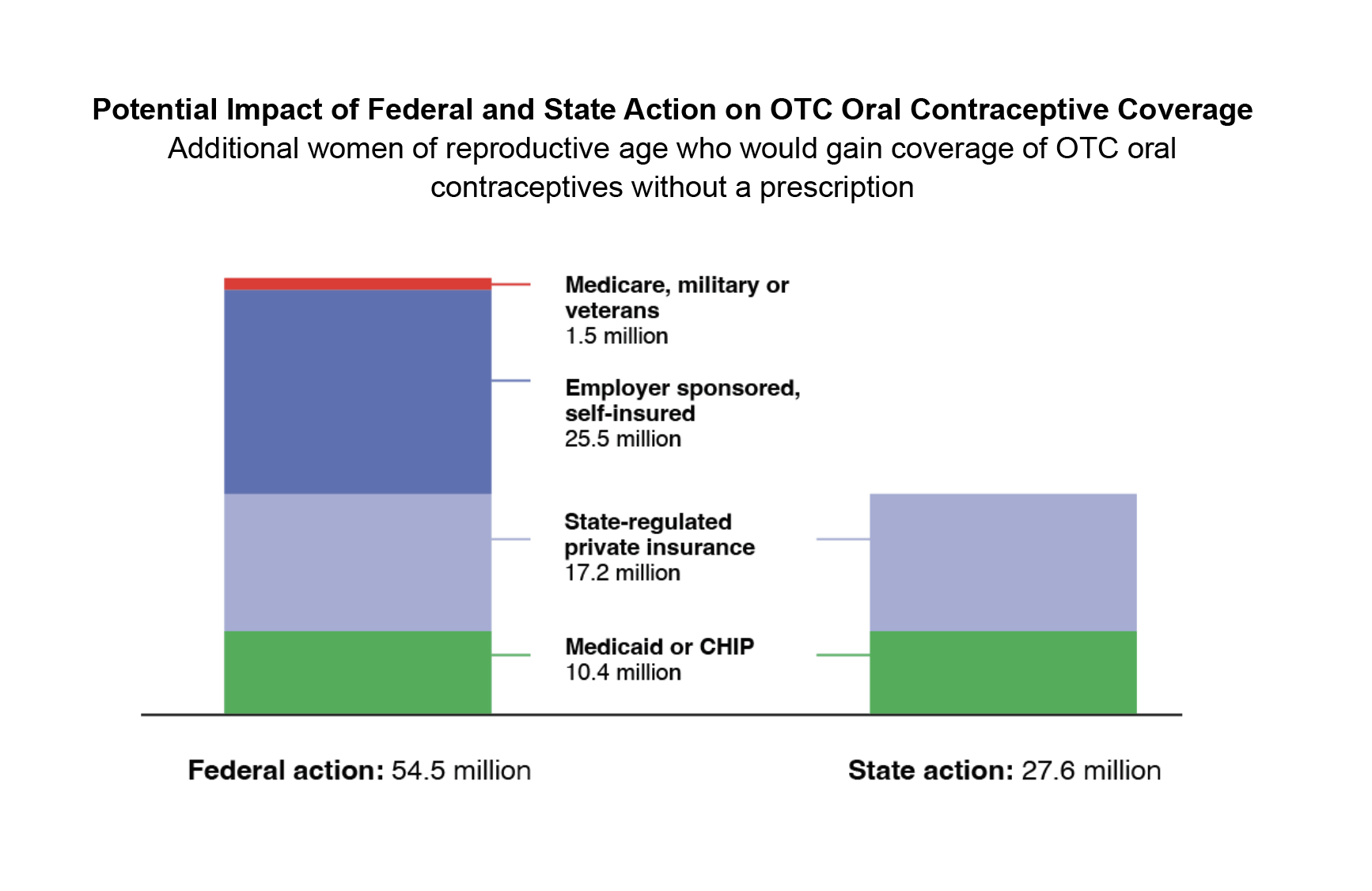
If the federal government took action, it could help 54.5 million additional women aged 15-49 with private or public health coverage.
If the remaining states took action on their own, they could help 27.6 million additional women aged 15-49 with state-regulated private insurance and Medicaid coverage.
Reproductive health, autonomy and equity is critical
The introduction of the first daily over-the-counter (OTC) oral contraceptive has great potential for reproductive health and autonomy in the United States — but only if it is affordable.
Federal and state action on the coverage of OTC contraception could greatly impact reproductive health, autonomy and equity, particularly in the face of ongoing threats to reproductive rights.
Federal and state action on coverage would massively expand contraceptive affordability
Federal officials have the authority under the Affordable Care Act (ACA) and other laws to require nationwide coverage of OTC contraceptives without a prescription under private insurance plans, Medicaid and other public programs.
Changes to federal policy could have an enormous impact. An additional 54.5 million women could gain true OTC coverage of oral contraceptives, including 42.7 million women aged 15-49 with private insurance, 10.4 million with Medicaid or Children’s Health Insurance Program coverage (CHIP) and 1.5 million with Medicare, military or veterans coverage.
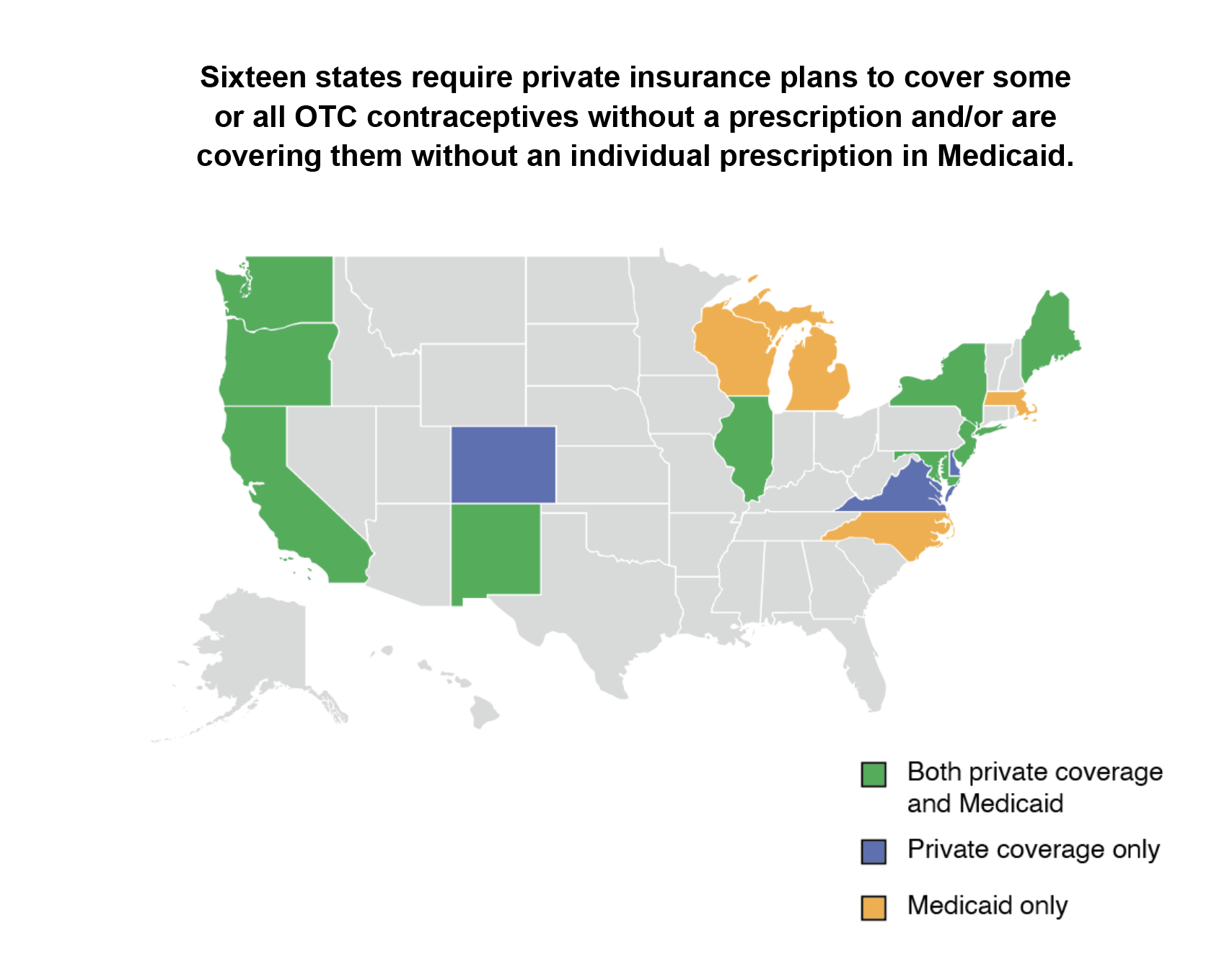
There is precedent for mandating coverage of OTC contraceptives without a prescription. Already, policies in 16 states require coverage of some or all OTC contraceptives in state-regulated private insurance plans, are covering them without an individual prescription in Medicaid or are doing both.
Even without federal action, changes to state policy could help millions more women. An additional 27.6 million women could gain true OTC coverage of oral contraceptives, including 17.2 million with state-regulated private insurance and 10.4 million with Medicaid or CHIP coverage.
Eight million uninsured women also need affordable contraception
Policymakers must also act to make OTC contraceptives free or affordable for the 8 million women aged 15-49 who are uninsured.
The Need and Urgency
The Food and Drug Administration’s (FDA) approval of Opill as the first daily OTC oral contraceptive has the potential to serve as a major advance in reproductive health and autonomy. The pill is the most common reversible form of contraception, used by 21% of all regular contraceptive users, and it is the most effective OTC option on the market. A highly effective OTC contraceptive option should allow people to bypass major logistical and financial barriers that are often attached to prescription options, including finding a regular health care provider, taking time off from work or other responsibilities, covering insurance or other out-of-pocket costs for an office visit and any necessary expenses and logistical burdens for travel and child care.
However, the full potential of Opill or any other OTC contraceptive options, current or future, will only be reached if they are affordable for consumers. Cost can be a severe barrier, particularly for many young people and people with low or no income, and studies have indicated that the potential demand for an OTC oral contraceptive is highly dependent on how much it would cost out of pocket.
Insurance coverage for OTC contraceptives — with no out-of-pocket costs and without a prescription — could help make these options affordable for the vast majority of people in the United States who need them, including the 89% of women of reproductive age (15-49) who had some form of private or public health coverage in 2024.
However, health insurance in the United States has not traditionally provided this standard of coverage for OTC products. Many health plans limit coverage to prescription drugs and devices. When plans do cover OTC products — such as when they are required to cover OTC contraceptives and other preventive OTC products under the Affordable Care Act — they typically force enrollees to obtain a medically unnecessary prescription to allow coverage for the product.
The FDA and OTC Oral Contraceptives
Opill was approved by the FDA in July 2023 and has been available for sale in the United States since March 2024. Opill is a progestin-only pill (POP) or “mini-pill,” which is the same type of medication commonly used for emergency contraception, which had already been available OTC for years. POPs have been used in the United States since the 1970s, and have a strong safety record of more than 50 years.
At least one manufacturer is currently working to secure FDA approval for OTC sales of a second type of oral contraceptive: a combined oral contraceptive (COC or “the pill”). COCs have more contraindications than POPs, but also have decades of research and real-world experience reinforcing their safety. Notably, more than nine in 10 oral contraceptive users are currently using a COC instead of a POP, so OTC availability of the pill would be another major advance in reproductive health options.
Affordability
Watch CAI's video on affordability of OTC contraception.
Precedent for Mandated OTC Coverage
Fortunately, the trend toward coverage for OTC contraception has been building in various states. Currently, 16 states require coverage of some or all OTC contraceptive products without a prescription in state-regulated private insurance plans, are covering them without an individual prescription under Medicaid or are doing both. (An example of coverage without an individual prescription would be by issuing a “standing order,” which is a prescription generated for a defined group of enrollees; discussed further below.) Among these states, there is not a defined standard for which methods to cover — some policies are limited to emergency contraception or condoms, and some are broader and explicitly include coverage for OTC oral contraceptives.
There has also been significant — although currently stalled — movement at the federal level. The Biden Administration attempted to build on this precedent and require coverage of OTC contraceptives without a prescription under private insurance plans nationwide. An October 2023 Request for Information by the Departments of Health and Human Services, Labor, and the Treasury sought to gather public input on the potential benefits, costs, logistics and challenges of requiring coverage of OTC preventive items and services without a prescription. The departments followed up with proposed regulations in October 2024 that would have required health plans to cover OTC contraceptives without a prescription and without cost-sharing. However, the departments chose to withdraw the proposed regulations after the 2024 elections, and the Trump Administration has made no moves of its own on OTC contraceptive coverage.
The federal government has the policy levers to advance such coverage under nearly all U.S. private health plans, as well as under numerous public insurance programs, such as Medicaid, Medicare, CHIP and coverage for federal employees, the military, veterans and their families.
Potential Impact of Coverage
State Requirements
Policymakers in several states have taken steps in recent years to require coverage for OTC contraceptives, often specifying that a health plan may not require a prescription to activate coverage.
Private insurance plans
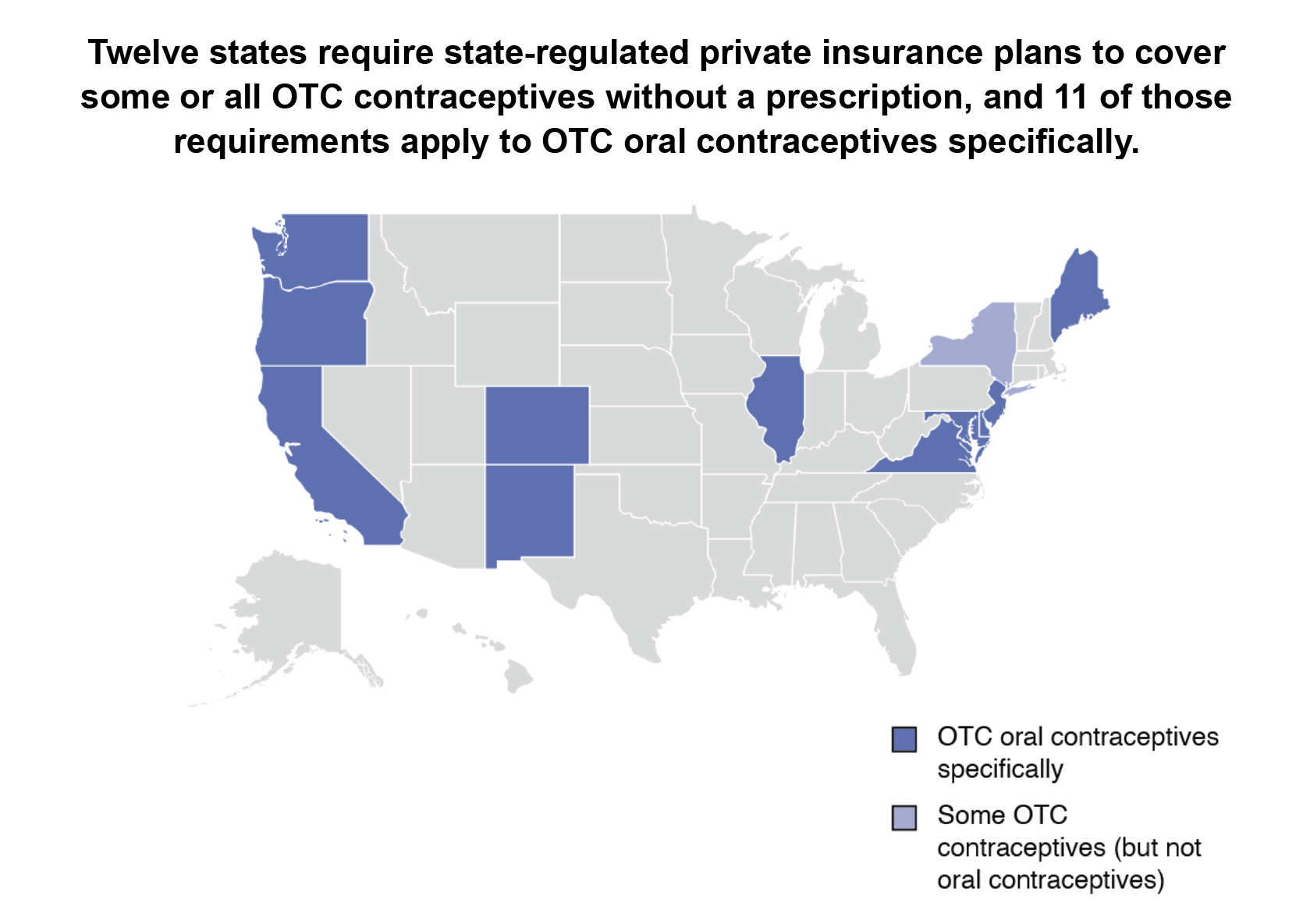
As of May 2026, 12 states require state-regulated private insurance plans to cover at least some OTC contraceptives without a prescription: California, Colorado, Delaware, Illinois, Maine, Maryland, New Jersey, New Mexico, New York, Oregon, Virginia and Washington. Collectively, these laws benefit about 9.3 million women aged 15-49 — which is the number of women living in those 12 states who had state-regulated private health insurance (as of 2024, the most recent year of data available).
Eleven of those 12 state laws — covering 7.9 million women aged 15-49 — are written broadly enough to cover Opill and other future OTC oral contraceptives. (New York’s requirement is the exception: It includes a clear requirement to cover only OTC emergency contraception without a prescription.)
Several other states (including Connecticut, the District of Columbia, Minnesota and New York in the case of OTC contraceptives beyond emergency contraceptives) have policies that require insurers to cover OTC contraceptives, but do not explicitly apply this policy when the enrollee has not obtained a prescription. The laws in Illinois and Oregon also have this problem, but those two states have clarified their policies through regulation or guidance. States that have enacted OTC coverage requirements in recent years, such as Virginia in 2026, have avoided this problem by specifying that coverage must be provided “with or without a prescription” or that “a prescription is not required” for a nonprescription drug.
State-regulated private insurance plans include fully insured plans bought by employers on behalf of their employees, as well as private plans purchased by individuals or families on the ACA’s health insurance marketplaces or through other means. Notably, state laws do not apply to health plans from employers that self-insure, which accounted for about 57% of enrollees in employer-sponsored plans in 2024. Only federal law can regulate self-insured employer plans.
Medicaid
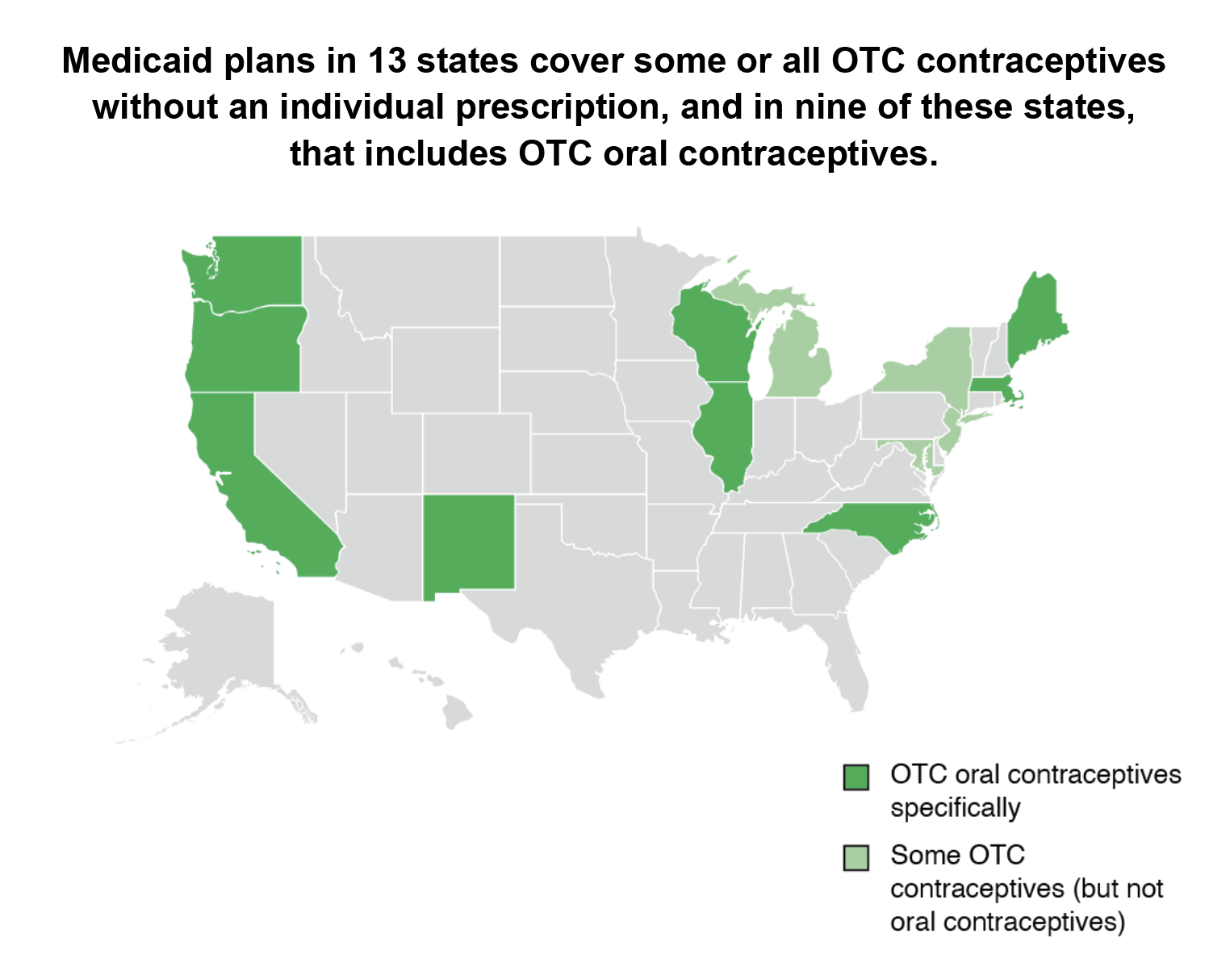
The situation is similar for Medicaid: As of May 2026, Medicaid plans in 13 states cover at least some OTC contraceptives without an individual prescription: California (see also), Illinois (see also), Maine, Maryland, Massachusetts (see also), Michigan, New Jersey, New Mexico (see also), New York (see also), North Carolina, Oregon (see also), Washington and Wisconsin (see also here and here). This coverage benefits about 7.6 million women aged 15-49.
In nine of these states, covering 5.1 million women 15-49, the coverage clearly includes OTC oral contraceptives: California, Illinois, Maine, Massachusetts, New Mexico, North Carolina, Oregon, Washington and Wisconsin. (In the other four states, coverage is limited to emergency contraceptives and/or condoms.)
Under current federal Medicaid policy, the federal government will only pay its share of coverage for OTC products if the enrollee first obtains a prescription. Because of this restriction, states’ options for covering OTC contraceptives under Medicaid are constrained. In some cases, states have paid for OTC products with state-only dollars, bypassing the federal prescription requirement entirely by taking on the full costs.
In other cases, states have implemented workarounds that allow a pharmacist to dispense OTC contraception and bill Medicaid, either through a “standing order” or by empowering pharmacists to prescribe contraception. These pathways enable access without the consumer having to first obtain an individual prescription from a provider at a clinic or doctor’s office. In some states, a state health official has issued a “standing order” for OTC oral contraceptives for Medicaid beneficiaries or another defined group of the population — this is considered a prescription under federal rules, but is less of a barrier than an individual prescription. This pathway has also been used to reduce barriers to naloxone. Other states allow pharmacists to prescribe and dispense prescription contraceptives, and several have streamlined those policies for OTC contraceptives, without the same screening, counseling and other requirements that are appropriate for prescription drugs but are unnecessary for products approved for OTC sales.
Depending on how they are implemented by the state and individual pharmacies, these types of workarounds may or may not be as simple to use for enrollees and pharmacy staff as true OTC coverage, but they may be the best that many states can do without a change to federal rules. And even if a state has required true OTC coverage under Medicaid or private insurance, the policy is unlikely to reach its full potential without additional efforts to educate stakeholders and the general public, work out implementation details and conduct oversight and enforcement (as detailed in other CAI reports).
Summary
In total, this means that 17 million women aged 15-49 in 16 states already have coverage for at least some forms of OTC contraceptives, without out-of-pocket costs and without having to obtain an individual prescription. Of them, 13 million women aged 15-49 in 14 states have coverage for OTC oral contraceptives specifically.
This coverage may not yet be the national standard, but there is significant evidence of a growing trend that recognizes the importance of covering OTC contraception without a prescription. Other states can and should follow this trend. If every state did so, they would be able to extend coverage for OTC oral contraceptives to an additional 27.6 million women, including 17.2 million with state-regulated private insurance and 10.4 million with Medicaid or CHIP coverage.
New Federal Requirements
As detailed previously, federal policymakers have the authority under the ACA to require coverage of OTC contraceptives, without cost-sharing and without a prescription. However, the federal government has not exercised that authority, instead recommending — but not requiring — that health plans eliminate the prescription requirement.
If federal policymakers updated the ACA requirement to explicitly require coverage of OTC contraceptives without a prescription, the benefits would be enormous. Of the 50.6 million women aged 15-49 with private insurance, 7.9 million in 11 states have state-regulated health insurance that is required to meet this standard of coverage for OTC oral contraceptives. That means that a new federal requirement to cover OTC oral contraceptives without a prescription — just under the ACA — would directly benefit 42.7 million women aged 15-49 nationwide.
That number includes all women aged 15-49 in self-insured employer plans, as well as those in state-regulated private plans in 39 states and the District of Columbia. It also includes enrollees in the Federal Employees Health Benefits Program, which is not technically governed by the ACA’s contraceptive coverage requirement, but which has nevertheless consistently followed those rules.
The ACA requirement extends beyond private insurance coverage to also include many people enrolled in Medicaid — most notably, everyone enrolled under the ACA’s major Medicaid expansion, covering adults with family incomes under 138% of the federal poverty level. Forty states and the District of Columbia have adopted and implemented this expansion as of February 2026. These expansions accounted for roughly one-quarter of all Medicaid enrollees nationwide in 2025.
Moreover, an updated ACA requirement would likely benefit most or all of the remaining Medicaid enrollees as well, because states have generally aligned their contraceptive coverage practices across their entire Medicaid program. The federal government has additional policy levers it could use to require or facilitate coverage for OTC contraceptives without a prescription throughout the entire Medicaid program and the related CHIP.
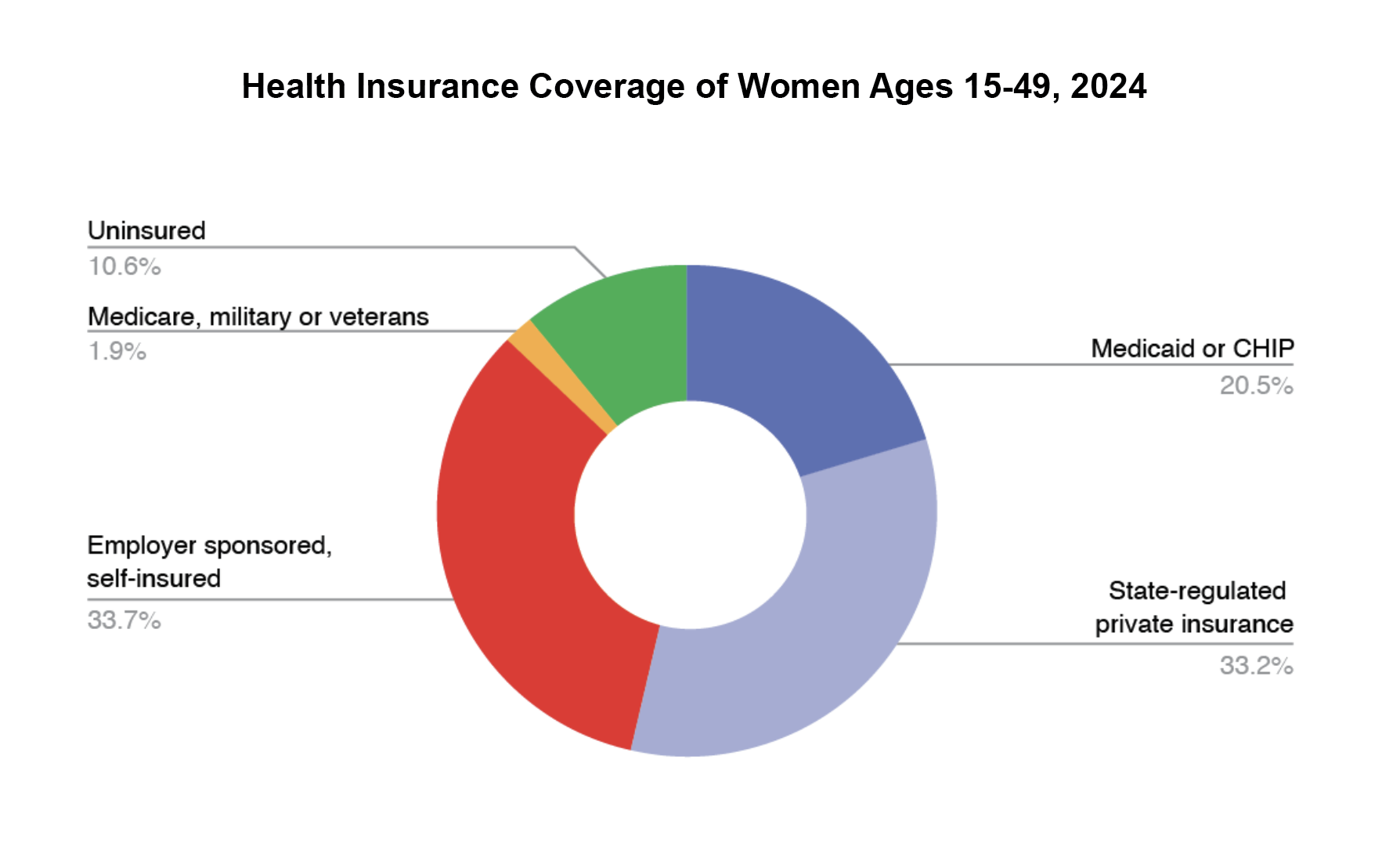
Therefore, in practice, an updated ACA requirement to cover OTC oral contraceptives without a prescription — along with additional federal action — might benefit as many as 10.4 million women aged 15-49 with Medicaid or CHIP coverage living in 41 states and the District of Columbia. (That would be in addition to the 5.1 million in the nine states where women already have this coverage.)
Finally, federal officials have opportunities to require or facilitate the coverage and availability of OTC contraceptives without a prescription under other federal programs, including Medicare, the Military Health System and the programs run by the Department of Veterans Affairs. An additional 1.5 million women aged 15-49 rely on these programs for contraception coverage.
Altogether, federal action has the potential to reach 54.5 million women of reproductive age, including those in private plans, Medicaid and other federal coverage programs. Federal action could also improve and protect OTC contraceptive coverage for millions more women who already have this coverage under state policies.
The Uninsured
There is one group that would not be helped by federal or state action to require health plans and coverage programs to cover OTC contraceptives without a prescription: the uninsured. The ACA dramatically reduced the number of uninsured people in the United States, but it could not close those gaps entirely. Millions of people — including 8 million women aged 15-49 in 2024 — remain without health insurance.
One avenue for addressing this problem would be federal and state efforts to further expand health coverage. Such actions could include: state ballot initiatives and other efforts to adopt the ACA’s Medicaid expansion in the remaining 10 states; offering further subsidies for ACA marketplace coverage to address affordability concerns; eliminating policies that exclude many immigrants from coverage and helping people learn about and enroll in subsidized marketplace and Medicaid coverage for which they are eligible but not using.
In addition, there may be more narrowly tailored ways of making OTC contraceptives free or affordable for people without health coverage, including availability for free or at a discount at publicly supported health clinics, drug companies’ patient assistance programs or coupons offered by new government programs or private entities.
Unfortunately, federal policy has been moving in the opposite direction during Trump’s second term. Congress and the administration have made substantial changes and cuts to Medicaid and the ACA that the Congressional Budget Office (CBO) projects will lead to 15 million more uninsured people. Independent researchers estimate even higher coverage losses.
Moreover, federal policymakers have simultaneously made multiple attacks on safety-net health centers that provide people with comprehensive, high-quality family planning care. The Trump administration has withheld Title X family planning funding from hundreds of clinics on a flimsy pretext, Congress barred Planned Parenthood health centers from Medicaid for a year, the administration reinterpreted federal law to bar federally qualified health centers and Title X-supported clinics from serving many immigrants and both the Trump Administration and congressional appropriators have threatened to eliminate the Title X program entirely.
Federal policymakers can and should reverse course on many of these actions. In the meantime, state policymakers must work to mitigate the harm of these federal policies. For example, states can work to minimize the harm of the pending federal Medicaid work requirements — the largest of the new threats to Medicaid coverage — through thoughtful implementation and decisions that prioritize keeping people enrolled.
Conclusions
There is clear momentum toward expanding health insurance in the United States to include coverage for contraceptive products obtained over the counter without a prescription. Already, 17 million women aged 15-49 in 16 states have private or Medicaid coverage for one or more types of OTC contraception, without having to obtain a prescription.
The federal government can and should turn this momentum into a nationwide standard for private insurance, Medicaid and other public insurance programs. Doing so via updates to the ACA’s contraceptive coverage requirement would benefit 42.7 million women aged 15-49 across the country who rely on private insurance. That policy change, in combination with other federal actions, could similarly extend coverage of OTC oral contraceptives without a prescription to 10.4 million women aged 15-49 with Medicaid or CHIP coverage. Additional policy changes could benefit 1.5 million women with Medicare, military or veterans’ coverage. Altogether, federal policy changes could extend coverage of OTC oral contraceptives without a prescription to an additional 54.5 million women, beyond those already benefiting from state OTC coverage policies.
Yet states should not wait for the federal government to act. New state policies could provide an additional 27.6 million women with OTC coverage of oral contraceptives without a prescription, including 17.2 million with state-regulated private insurance and 10.4 million with Medicaid or CHIP coverage.
Beyond these steps, the federal and state governments should also work to extend coverage and/or make OTC contraceptives free or affordable for the millions of U.S. residents who remain uninsured. And they should devote substantial new attention and resources to implementation, education and enforcement efforts, ensuring that coverage requirements translate into coverage that works.
Doing all of this could help millions of people overcome current barriers to consistent and effective contraceptive use. That, in turn, would result in more reproductive autonomy and would enable enrollees to avoid unplanned pregnancies, to better time and space their pregnancies and to reduce their chances of an unhealthy pregnancy and birth, thereby improving health outcomes. These steps would also advance the goal of reproductive equity, because barriers to contraceptive use fall hardest on people of color, young people, immigrants, LGBTQ+ people, low-income people and people with disabilities, among others.
Finally, a well-communicated, well-implemented and well-enforced requirement for health plans to cover OTC contraceptives could be an opportunity to help transform the broader health insurance system. Health plans do not exclude coverage for OTC products because they are medically unnecessary or ineffective; they exclude these healthcare products because doing so helps plans to shift costs to consumers and maximize their own profits. This status quo — with its arbitrary distinction between prescription and OTC products — is antithetical to the ACA’s goals of improving consumers’ health coverage and health outcomes.
Glossary
For a more extensive glossary, see healthcare.gov
Affordable Care Act (ACA)
A 2010 federal law that expanded eligibility for various types of private and public health insurance and established new federal requirements for health insurance.
Combined oral contraceptive (COC or “the pill”)
The most commonly used type of hormonal birth control pills in the United States. This oral contraceptive contains both estrogen and progestin. (See “Progestin-only pill” for the other type of birth control pill.)
Fully insured employer plan
A type of health plan in which an employer purchases coverage for their employees from an insurance company, paying monthly premiums in exchange for the insurance company taking on the risk of unexpected costs; can be regulated by both federal and state governments.
Over-the-counter (OTC) product
A medication or medical device that has been approved by the U.S. Food and Drug Administration to be sold to consumers without a prescription from a medical provider.
Progestin-only pill (POP or the “mini-pill”)
One of two main types of hormonal birth control pills. The POP is an oral contraceptive that only contains progestin; the first OTC oral contraceptive, Opill, is a progestin-only pill. (See “combined oral contraceptive” for the other type of birth control pill.)
Self-insured employer plan
A type of health plan in which an employer itself takes on the responsibility and risks of paying medical claims for employees (with or without assistance from an outside company in administering the plan); can be regulated only by the federal government.
State-regulated private insurance
Includes fully insured plans bought by employers on behalf of their employees, as well as private plans purchased by individuals or families on the ACA’s health insurance marketplaces or through other means.
Appendix: State Level Data
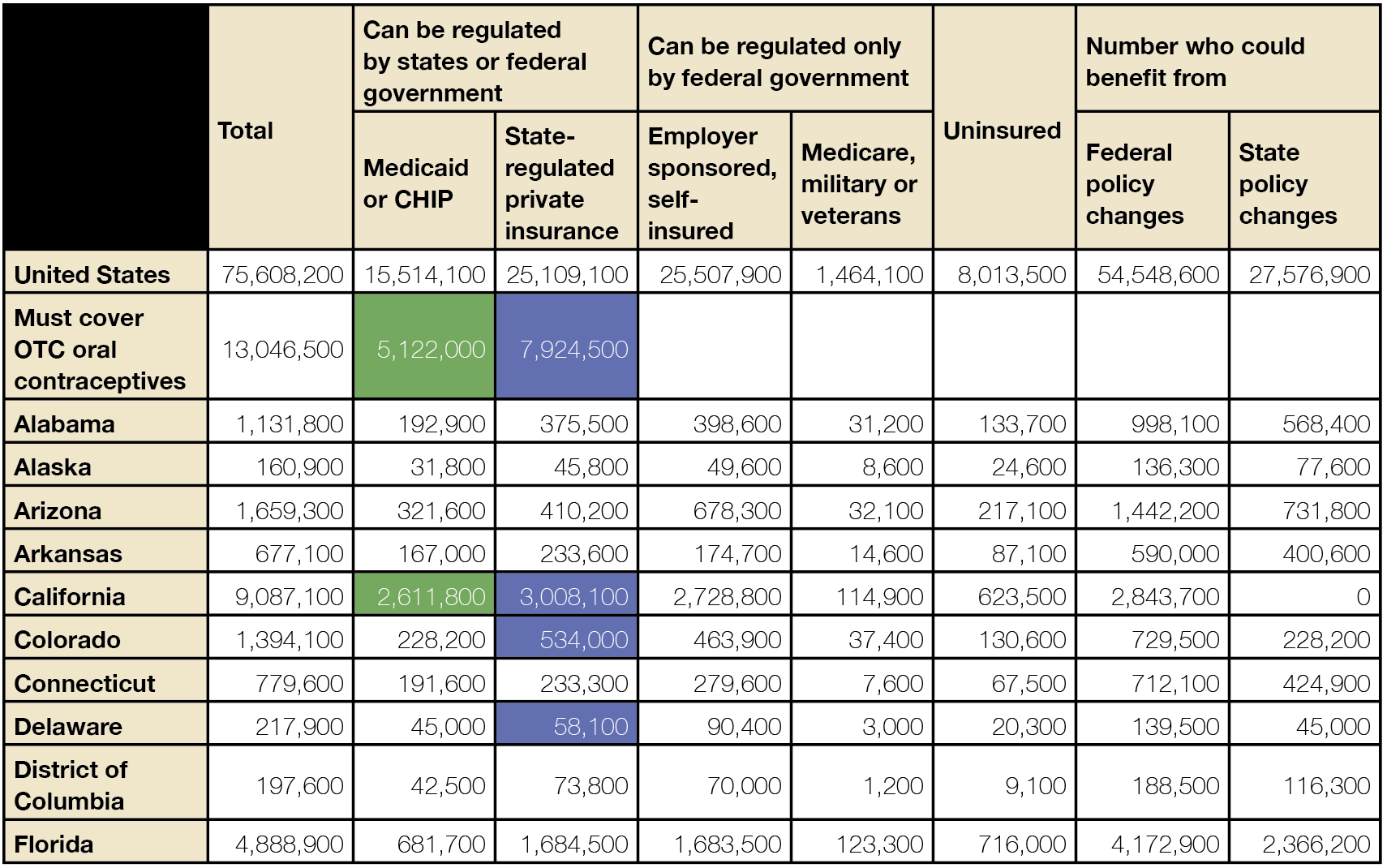
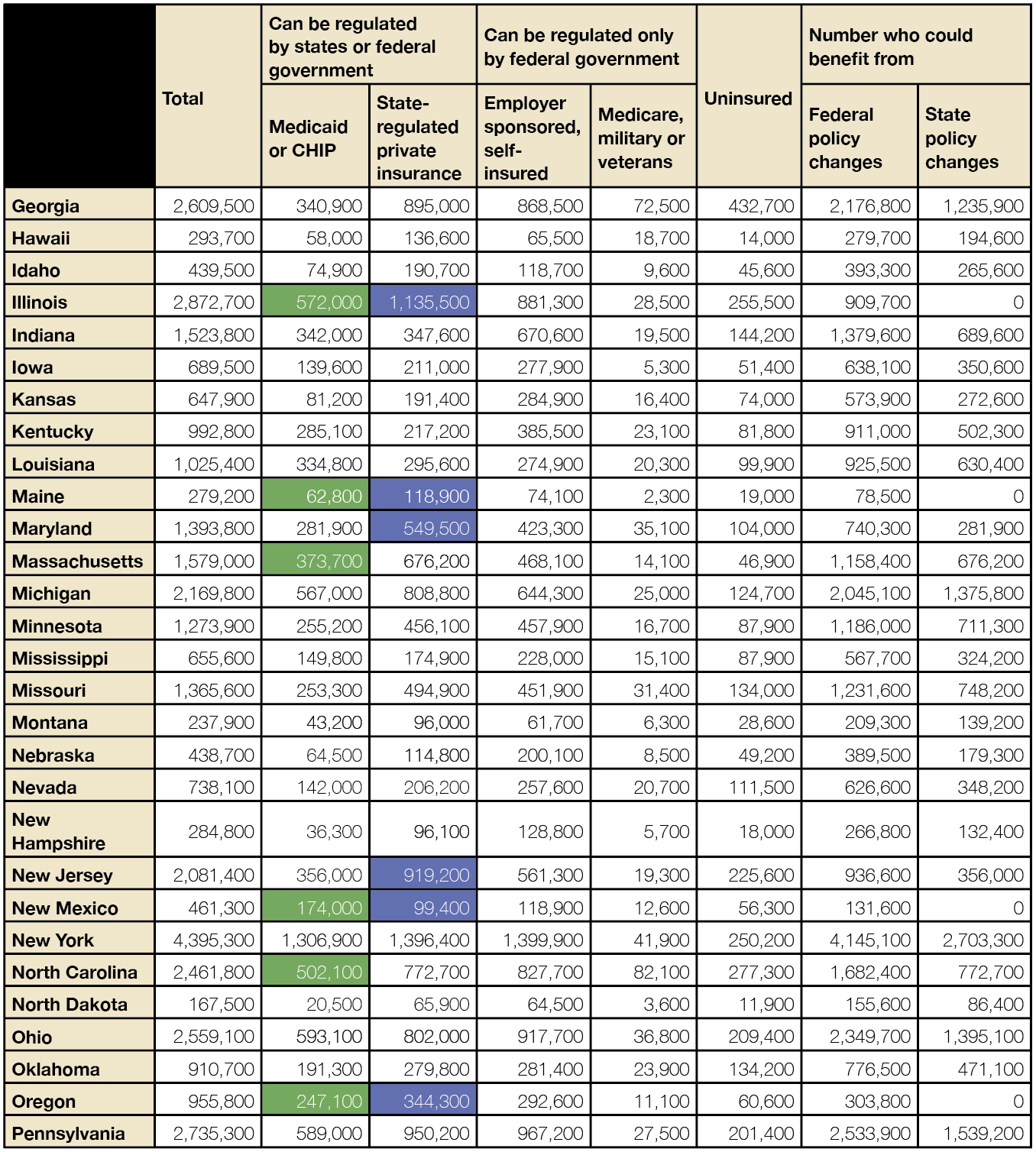
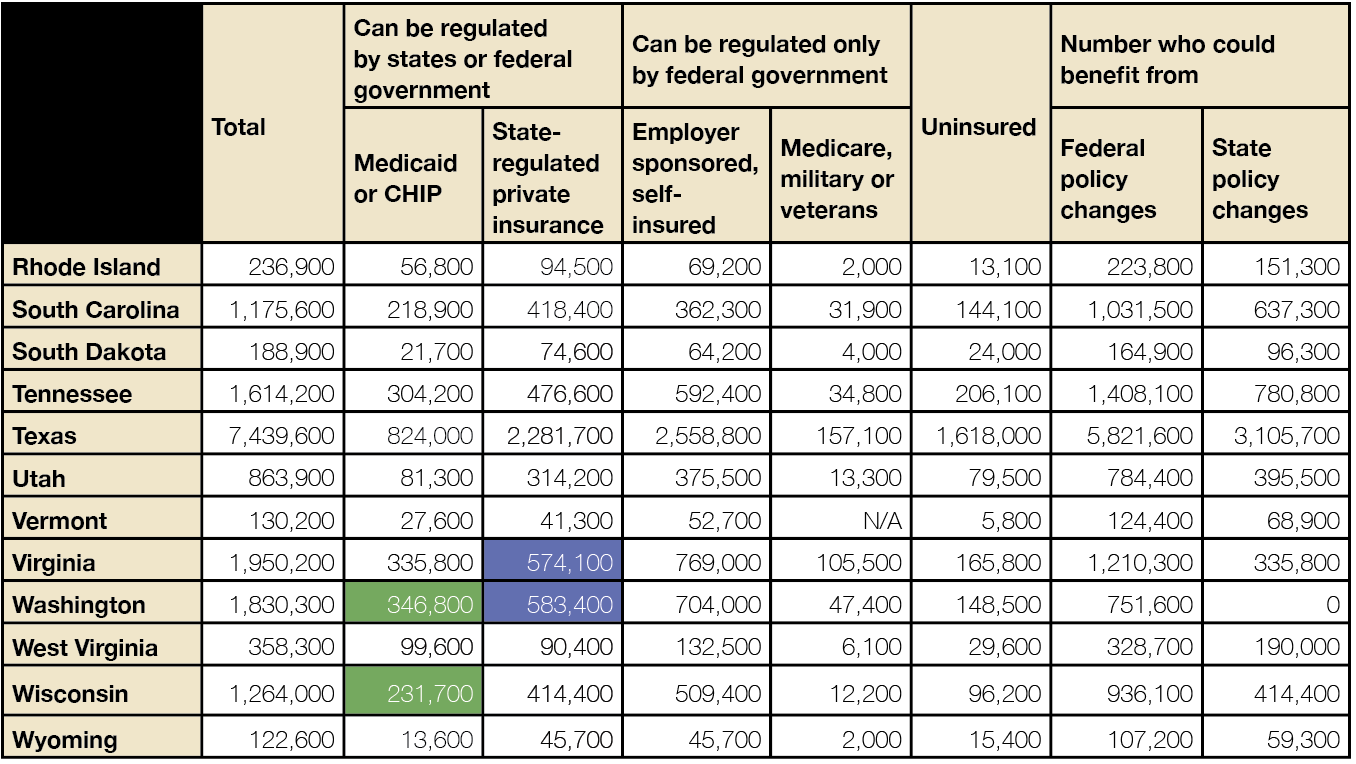
Health Insurance Coverage of Women Ages 15-49, 2024
Data Context
Because these individuals are already subject to state-level requirements, they are not included in the totals in the final two columns, which indicates those who would benefit from new federal or state requirements.
Data may not sum to totals due to rounding.
Key
The blue shading in this table indicates the number of individuals who fall under state requirements for coverage of OTC oral contraception in state-regulated private insurance plans.
The green shading in this table indicates the number of individuals who fall under state requirements for coverage of OTC oral contraception in Medicaid plans.
N/A = not available.
Appendix: Methods
State contraceptive coverage policies: The first step in this analysis was to identify state-level policies that either require coverage of OTC contraceptives in state-regulated private health insurance plans or that establish coverage of OTC contraceptives without an individual prescription in the state’s Medicaid program. CAI’s analysis built on prior work by CAI, Free the Pill, the Guttmacher Institute, KFF and Power to Decide in tracking and analyzing state contraceptive coverage policies. We reviewed state government websites to identify all relevant laws, regulations, standing orders and other policy documents that had been put in place by May 2026. We assessed whether they clearly prohibit insurance plans from requiring a prescription for OTC products, to what extent they would translate to seamless coverage without a prescription and whether they would apply to an OTC oral contraceptive specifically.
Insurance coverage for women of reproductive age: In order to determine how many women were impacted by current state coverage policies, we needed state-level data on insurance coverage for women of reproductive age (aged 15-49). We started with a KFF analysis of 2024 data from the Census Bureau’s American Community Survey (ACS), the most recent year available. That analysis includes six categories of insurance coverage: Employer, Non-Group, Medicaid (including CHIP), Medicare, Military (including Veterans Administration) and Uninsured. (The Uninsured category includes people with access to the Indian Health Service, which provides free care at specific medical facilities, but no formal health insurance.)
We then split the Employer category into two groups — fully insured employer plans and self-insured employer plans — using a KFF analysis of 2024 data from the Agency for Healthcare Research and Quality’s Medical Expenditure Panel Survey.
Women impacted by state coverage requirements: To estimate the number of women aged 15-49 impacted by state requirements on private health insurance policies, we included all in a given state who were either in fully insured employer plans or in non-group plans (which include private plans purchased by individuals or families on the ACA’s health insurance marketplaces or through other means). For women aged 15-49 impacted by state Medicaid policies, we included all in a given state with Medicaid coverage.
Women impacted by potential federal action: We looked at three possible categories of federal action. For potential impact on privately insured women via a change to the rules governing the ACA’s contraceptive coverage requirement, we included women aged 15-49 nationwide who were in fully insured employer plans, self-insured employer plans or non-group plans. We then subtracted out privately insured women in 11 states who were already subject to a state-level requirement to cover OTC oral contraceptives without a prescription.
To assess the potential impact on women enrolled in Medicaid and CHIP, we included women aged 15-49 nationwide who were in these programs. We then subtracted out women in nine states who were already subject to a state-level Medicaid policy to cover OTC oral contraceptives without a prescription.
To assess the potential impact on women in other federal programs, we included women aged 15-49 nationwide who had Medicare coverage or Military coverage (which includes coverage provided through the Veterans Administration).
Limitations: These estimates are not a precise accounting of the number of people who might be affected by state or federal policies. First, this report leverages data from the ACS, which limits sex identification to “male” and “female.” Because of the limitations of these data, this report categorizes women of reproductive age (15-49) to approximate the group of people most likely to benefit from affordable access to OTC oral contraceptives and similar options. Of course, the benefits of insurance coverage for OTC contraceptives is not limited to people who identify as “female” in the ACS. Some people who identified as men in the survey might benefit from hormonal contraception, and numerous other men (as well as their partners) would benefit from coverage for condoms for contraceptive and/or STI prevention purposes.
Second, the insurance categories used in this analysis do not always match up perfectly with state and federal policy requirements. For example, the ACS data include CHIP enrollees under the Medicaid category, but state and federal Medicaid policies do not automatically apply to some CHIP enrollees. Similarly, the ACS data on employer coverage include enrollees in the Federal Employees Health Benefits Program, which is not technically governed by the ACA’s contraceptive coverage requirement.
Third, these estimates do not account for people whose health insurance is exempted from federal or state coverage requirements. For example, we were unable to account for people in ACA grandfathered plans, which are exempt from the ACA’s contraceptive coverage requirement. Similarly, we were unable to account for people in plans with religious exemptions to the federal ACA requirement and/or state-level contraceptive coverage requirements.
Finally, these estimates are based on state and federal policies as written in statute, regulation or other form. It is possible that we failed to identify some relevant state policies, such as technical documents for Medicaid staff or Medicaid-participating pharmacists. Moreover, we were unable to account for whether these policies are being fully enforced as written, and whether the process for enrollees in using their coverage for OTC products is working as seamlessly as intended. As noted above, oversight and enforcement is critical to ensuring that these policies have their intended impact.
Acknowledgments
Adam Sonfield
Adam Sonfield is the owner of Sonfield Policy Solutions LLC, where he provides consulting services on healthcare policy and sexual and reproductive rights. He has expertise on Medicaid and private insurance coverage for reproductive health services, the Title X national family planning program and religious and moral exemptions to providing coverage and care. He worked for 24 years at the Guttmacher Institute, serving as executive editor for the organization’s policy analysis work and as a policy analyst, advocate, writer, editor, researcher and spokesperson.
Dana Singiser
Dana Singiser, co-founder of CAI, is the founding partner at Singiser Solutions, LLC, a boutique consulting and government relations firm located in Washington, DC. She is a reproductive health care policy expert with over 25 years of policy, political, campaign and legal experience. Prior to her work as a consultant, Dana served as senior vice president for Policy, Campaigns, and Advocacy at Planned Parenthood Federation of America. Dana also served in the Obama White House, where she worked as a Special Assistant to the President and as a key member of the team that helped pass the Affordable Care Act.
Contraceptive Access Initiative
The nonprofit Contraceptive Access Initiative works to increase access to contraception for all, free from stigma, bias or coercion. CAI’s affordability campaign advances access for all, including no-cost access to over-the-counter contraceptives.
For more information about the over-the-counter affordability campaign, and to see the affordability explainer video, see www.thepillotc.org/affordability
Copyright Contraceptive Access Initiative 2026
Design by Camino Creative caminocreative.com